
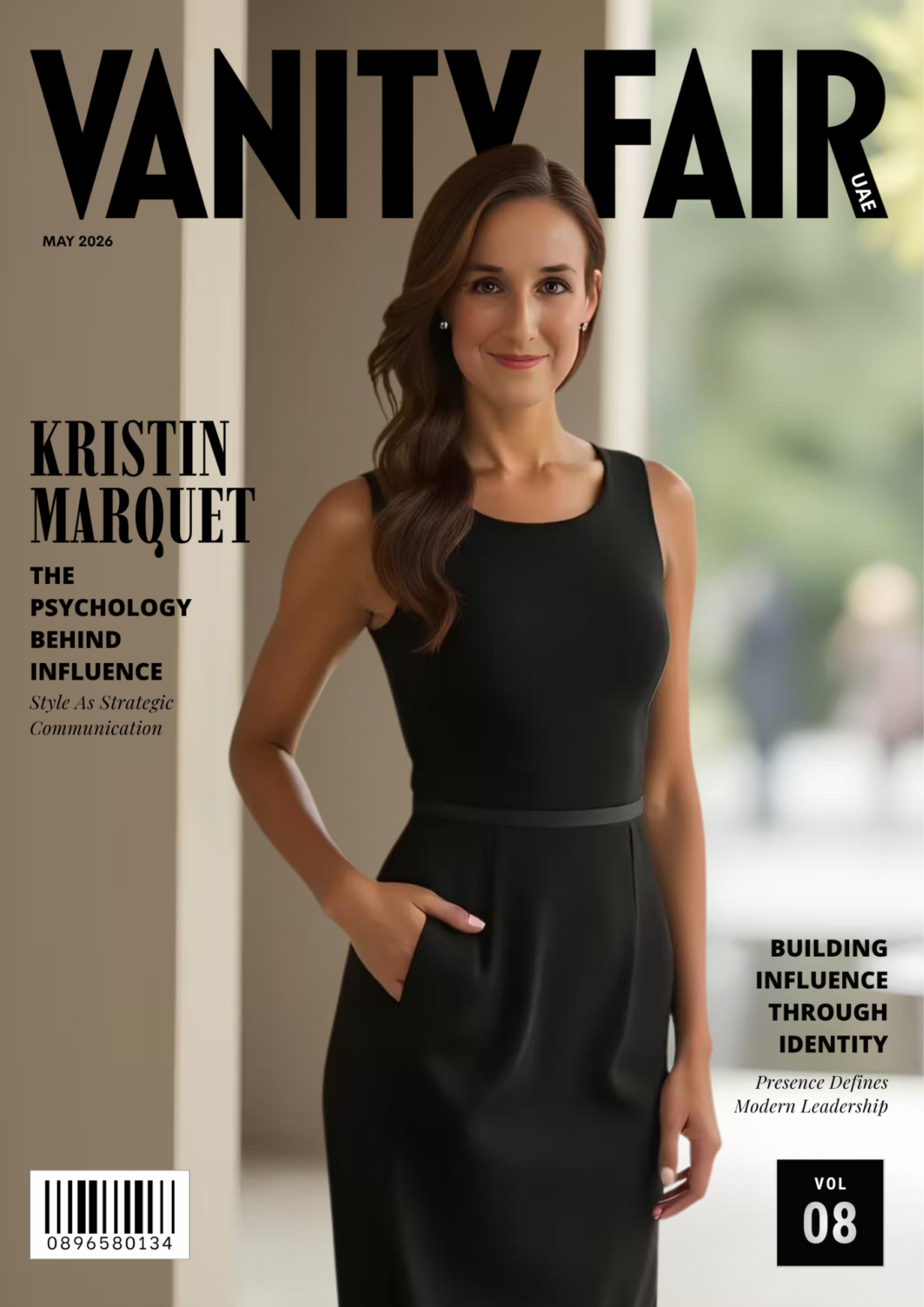
For years, conversations surrounding women’s success centered around one core belief: work hard, stay talented, and recognition will eventually follow. But according to entrepreneur, strategist, and cultural theorist Kristin Marquet, reality has never operated that simply.
“Visibility is not neutral. Perception is not neutral. Cultural capital is not neutral,” Marquet explains.
It is a philosophy that has quietly reshaped the way founders, executives, entrepreneurs, and high-achieving women approach identity, influence, and authority in the modern era. Through her work at KristinKMarquet.co and her award-winning agency One Quiet Morning, Marquet has spent nearly two decades helping women refine not only how they present themselves publicly, but how they are psychologically perceived within professional culture itself.
Now, her work is evolving into something far larger than branding or public relations.
At the center of Marquet’s growing body of work is a concept she calls the “Style Presence Gap” — a theory exploring why accomplished women are often underestimated, overlooked, or undervalued despite impressive credentials and expertise.
Unlike traditional conversations around fashion or personal branding, Marquet approaches style as a system of communication tied directly to power, perception, and influence.
For her, style is not superficial decoration. It is psychological infrastructure.
Beyond Fashion: The Hidden Mechanics of Influence
Marquet argues that society has long underestimated the role appearance, symbolism, identity, and visual coherence play in shaping professional outcomes. While many women dedicate years to developing expertise and credentials, far fewer are taught how perception systems influence trust, authority, opportunity, and visibility behind the scenes.
“The assumption has always been that if women are talented enough, eventually they’ll be recognized,” she says. “But perception shapes access long before merit is fully evaluated.”
Her work examines how media psychology, branding, consumer behavior, luxury aesthetics, gender dynamics, and cultural symbolism all intersect to influence public perception. In Marquet’s view, modern professional culture rewards visibility and identity fluency as much as technical competence.
This becomes especially relevant in today’s digital-first economy, where executives, entrepreneurs, creators, and founders increasingly function as public-facing brands. Whether through social media, online platforms, speaking engagements, or media exposure, visibility has become inseparable from opportunity.
Yet many women, Marquet believes, enter these environments without understanding the psychological frameworks driving modern influence.
“Women are taught that caring about style somehow diminishes intelligence,” Marquet says. “But the world responds to image, symbolism, and presentation every single day. Ignoring those systems doesn’t make them disappear.”
The Rise of the Style Presence Index

These observations ultimately led Marquet to develop what she calls the Style Presence Index — a proprietary framework designed to measure and analyze how image, identity, communication, digital presence, aesthetics, and symbolic positioning shape professional perception.
Rather than treating branding as a marketing exercise alone, the framework positions presence itself as a form of social infrastructure.
The methodology draws from a wide range of disciplines including psychology, femininity studies, luxury branding, media theory, cultural semiotics, consumer behavior, and identity architecture. Together, these elements form a system Marquet describes as “perceptual female authority.”
The idea is both timely and culturally relevant.
In an era where online visibility can determine business growth, career opportunities, investor interest, and cultural relevance, perception increasingly operates as a form of currency. The women who understand how to intentionally shape identity often gain influence faster than those relying solely on expertise behind closed doors.
Marquet believes this dynamic deserves far deeper examination.
Her framework does not encourage performative perfection or trend-driven branding. Instead, it seeks to help women understand the deeper psychological relationship between visibility and authority.
For Marquet, presence is not about pretending to be someone else. It is about creating alignment between internal identity and external perception.
Redefining Female Authority in the Visibility Economy

What makes Marquet’s perspective particularly distinctive is her refusal to separate femininity from authority.
Historically, many professional environments encouraged women to minimize visible expressions of style, beauty, or femininity in order to appear more credible. The underlying message suggested that seriousness and aesthetic expression could not coexist.
Marquet challenges that belief directly.
She argues that women have often been forced into a false binary where intelligence and visual presence are treated as opposites rather than complementary forms of communication.
Her work reframes style as strategic narrative construction — closer to architecture, design, psychology, and symbolism than vanity or trend culture.
This philosophy resonates strongly with a new generation of women navigating entrepreneurship, leadership, digital media, and public-facing careers. In these spaces, identity itself has become part of professional infrastructure.
Executives are no longer evaluated only in boardrooms. Founders are assessed through websites, interviews, social feeds, visual branding, and digital ecosystems. Public trust is increasingly formed through fragmented visual impressions before conversations even begin.
Marquet believes women deserve frameworks that explain how these systems function rather than leaving them to navigate visibility through intuition alone.
From PR Strategist to Cultural Critic

While Marquet originally built her career in branding and public relations, her work has gradually evolved into a broader critique of modern visibility culture.
She occupies an unusual space between strategist and cultural analyst — examining not only how influence works, but why society responds to certain forms of identity and presentation in the first place.
Through KristinKMarquet.co, she is now expanding the concept into a larger ecosystem of intellectual property, editorial content, research frameworks, educational systems, and digital products focused on what she sees as an emerging category: identity positioning for women in the visibility economy.
The ambition extends beyond helping women simply “look better.”
Instead, Marquet aims to decode the cultural mechanics behind perception itself.
Her work suggests that influence is rarely accidental. It is constructed through layers of symbolism, visual coherence, emotional resonance, storytelling, and psychological signaling — many of which operate subconsciously within modern media culture.
As traditional institutions lose cultural authority and digital ecosystems increasingly shape public status, Marquet believes understanding these mechanisms will become essential for women seeking long-term influence.
Presence as Power
At its core, Marquet’s philosophy centers on one transformative idea: presence is not superficial.
It is structural.
It influences opportunity, credibility, visibility, trust, and access. It affects how expertise is interpreted and how authority is assigned. In a world increasingly driven by digital exposure and symbolic communication, perception shapes reality more than many professionals are willing to acknowledge.
Marquet’s work encourages women to stop viewing style as a secondary concern disconnected from intelligence or ambition. Instead, she positions presence as an extension of strategy — a deliberate expression of identity capable of shaping professional outcomes and cultural influence.
“The future belongs to women who understand that presence isn’t about appearances alone,” Marquet says. “It’s the foundation that supports influence, opportunity, and lasting impact.”
As conversations surrounding personal branding, leadership, and female visibility continue to evolve, Kristin Marquet is emerging as one of the voices reframing how modern authority is built — not through superficial performance, but through intentional perception, identity fluency, and cultural understanding.
In doing so, she is challenging women to recognize something society has long understated: the psychology of presence may be just as powerful as expertise itself.